Posts

Showing posts with the label genre fiction

Portal fantasies and anticolonial uprisings

Image
 C.S. Lewis's Chronicles of Narnia books are perhaps the most recognisable portal fantasies there are-- The Lion, the Witch and the Wardrobe (1950) is the first book Farah Mendlesohn mentions when she explains the concept of the portal fantasy in Rhetorics of Fantasy , and I've found that I tend to default to that example as well when I try to explain the genre. It's also my default example when I try to talk about my research into spatiality in children's fantasy after empire. Because apart from being portal fantasies, the Narnia books are deeply rooted in ideas of colonialism and portrayals (both positive and negative) of colonizers. In the first book, published three years after the loss of British India and the independence of India and Pakistan, a group of British schoolchildren travel to a foreign land, discover that the natives are desperate for them to rule them, due to their unique racial background (they are human), and depose and replace the existing tyrant...
City of Several Walls

Image
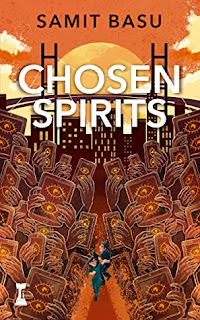
 Last weekend I was lucky enough to attend (virtually) the London Science Fiction Research Community's annual conference; this year's theme was "Beyond Borders: Empires, Bodies, Science Fictions" (perhaps I should have just dragged my students there rather than teaching for a whole term). There's a conference schedule here , which gives you a sense of quite how wide (geographically and intellectually) this conference's span was--and I wonder to what extent this was because the pandemic had forced us all online and thus saved a lot of people from the choice between skipping the conference and an expensive and exhausting negotiation with the UK's border regime.  My own paper took off from Samit Basu's recent SF novel, Chosen Spirits , which imagines an upsetting "best case scenario" for India ten years into the future. Basu's novel is set in a Delhi whose borders are rigorously policed against "mobs from the Uttar Pradesh wildlands...

My Own Private Country

The climax of Manto's "Toba Tek Singh" is powerful because of Bishan Singh's moment of refusal--he will not travel to Hindustan, he will not accept that he is physically in Pakistan, he will not accept the broader idea of the partition of his country. He declares that Toba Tek Singh is "here"; and while that might simply be interpreted as "on this side of the border", that the narrative itself constantly elides the difference between the man and the land means that the intuitive reading is "here, where I am". Essentially, in that moment, Bishan Singh creates a speculative country of his own; a space that exists outside the border politics of India and Pakistan. Creating a private country of your own is, while difficult, at least theoretically possible: the major obstacle seems to be getting your existence recognised and making other countries (who are likely to be a lot more powerful than you) respect your borders. There is a surprising a...

Murder in Space

Image
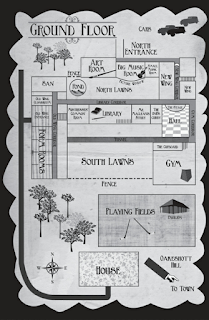
In his introduction to Spatiality , Robert T. Tally Jr. suggests that literature works as a kind of mapping, "offering its readers descriptions of places, situating them in a kind of imaginary space, and providing points of reference by which they can orient themselves" (2). He goes on to point out that the opposite is also true, that "to draw a map is also to tell a story" (4). This week I'm thinking about how these two things, the story-as-map and the map-as-story play out in a series of detective novels that I've really enjoyed.    In a recent talk during a book launch (for Death Sets Sail , which I’ll discuss later) the author Robin Stevens described travelling to Egypt, the setting of the book, and taking copious notes on such matters as the exact  position of the sun at particular points in the day, in relation to a ship heading South on the Nile, as these could all affect the events of the plot. Stevens writes children’s murder mysteries, which are ...